
01 Research content systems
Research publication management: the content system that makes your work findable
Research publication management runs on a content system: the taxonomy, publication library, author pages, search and the workflow that turns PDFs into web pages. Tailwebs plans it with your team before any design, then builds it, including AI-assisted extraction and tagging like the system we built for Vidhi's Crime and Punishment database.
- AuthorTheir profile lists it
- TopicIts hub features it
- ProgrammeIts page shows it
- EventWhere it was presented
- DatasetThe data behind it
02 From PDF to record
How does a PDF become a structured record?
In the workflow we plan, the document is ingested, AI extracts the fields, entities and citations your content model defines, a person reviews them in a queue, and only approved records are published and searchable.
- 01System
Ingest
Reports, briefs, laws, policies or judgments come in from uploads, old sites or a scraper.
- 02AI
AI extraction
The fields, entities and citations your content model defines are pulled out of each document.
- 03A person
Review queue
An editor checks each record, corrects it and approves it.
- 04Library
Publish
Only approved records go live, searchable in the library, on author pages and in topic hubs.
It fits flagship reports that need web versions with chapters and key findings, and large document sets such as laws, policies and judgments that have to become searchable data. Datasets rather than documents? See open data portal development.
Vidhi Centre for Legal Policy
Crime and Punishment
A scraping engine plus AI extracts punishment data and tags law sections across 7,305 crimes and 370 central laws, each turned into plain language. Tailwebs built it and maintains it. It cut manual effort by 90%, with higher quality, and states have adopted it.
crimeandpunishment.in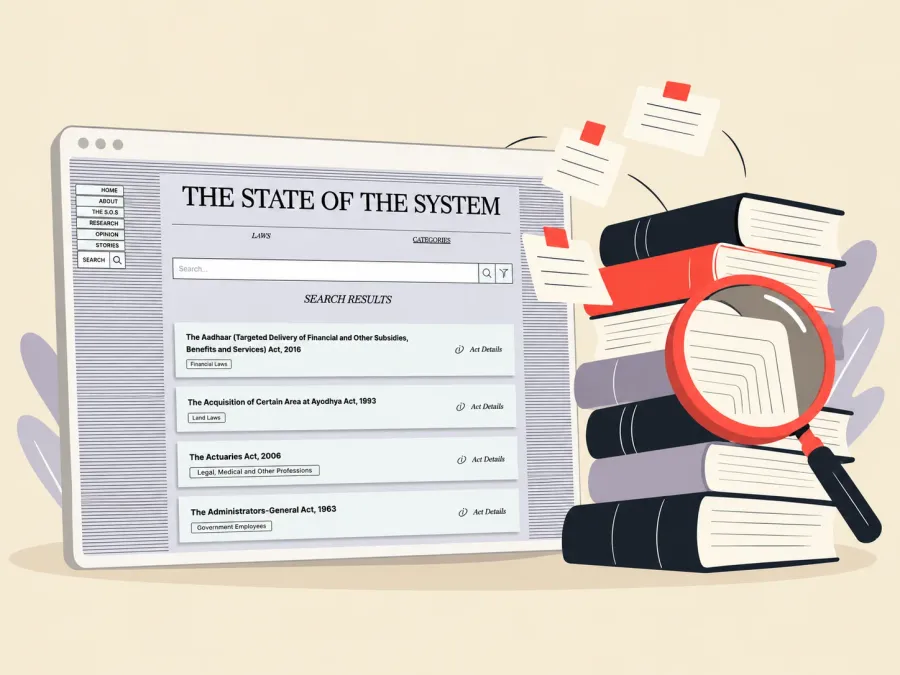
Excel models, calculators and forms rather than reports? See tool digitalisation. The back end of a document database can be built with our Ruby on Rails development team.
03 AI search
Will an AI search invent answers or citations?
It is built not to: it answers only from your own corpus, links each answer to the publication it came from, and sends the questions it cannot answer to your team.
- Answers from your corpus only
- The search or assistant reads your publications, not the open web.
- A source on every answer
- Each answer links to the publication it came from, so a reader can check it.
- Gaps reported
- Questions it could not answer are reported, so your team sees what is missing from your content.
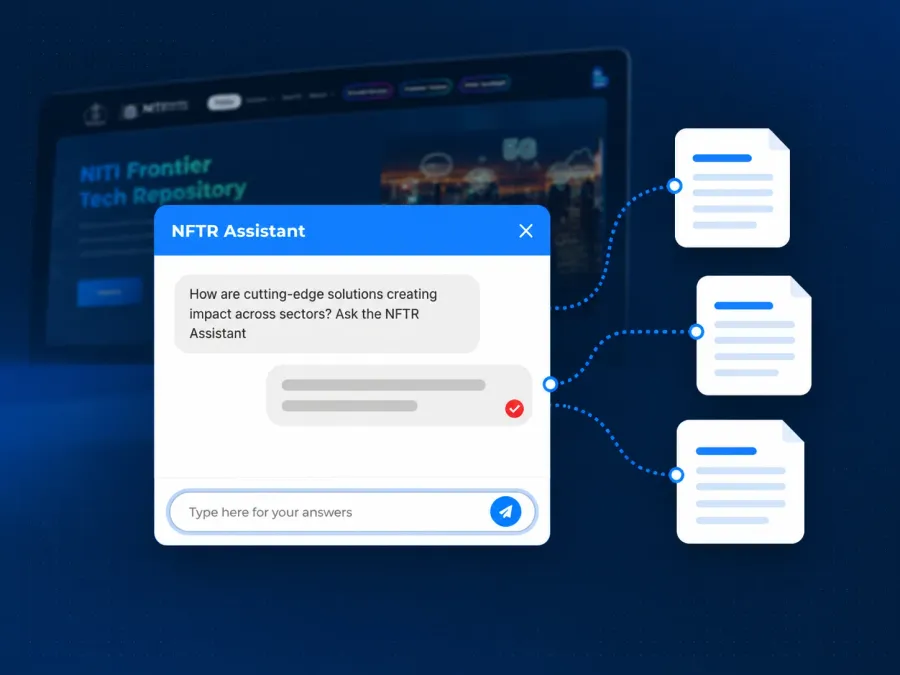
We run the same approach in our own product: TailGPT answers only from a site and its documents. How we build assistants like this: AI chatbot development. AI features beyond search: AI development.
04 Taxonomy clean-up
Content taxonomy for research organisations, with or without a rebuild
It starts with a taxonomy workshop with your team, and it can run inside your current system, before or instead of a rebuild, so a later migration is clean.
Taxonomy workshop
Your team agrees the topics, programmes, regions and formats, and what each one means.
Merge
Overlapping tags, often hundreds of them, become one agreed set.
Re-tag
Your content is re-tagged, AI-assisted and approved by a person.
Keep in sync
Author pages stay in step with publications, media and events.
When the rebuild comes, the clean model carries straight into a research website. The planning method behind it is on policy and research.
05 The editor's day
What does running it look like for editors?
A routine a non-technical team can keep: upload, check, approve, and the work appears everywhere it belongs.
Upload
An editor uploads the new report.
Check
The extracted fields wait in the review queue for a person to check.
Approve
The right people sign off, through roles and approvals.
Appear
The report shows in the library, on its authors' pages and in its topic hubs.
Digest
Optional: a digest or newsletter pulls new work by topic.
Want to score your current workflow first? Take the research website checklist.
06 Where to start
Where it fits, and where to start
Usually as part of a research website build, or as a clean-up before one. Either way, it starts with an ecosystem audit.
- Start
Discovery Sprint
An ecosystem audit of your content and sites, with a written build estimate.
₹1.5–3 lakh
$2,000–4,000
2–3 weeks
- Build
Research Website
The content system built into the site: content model, library, author pages and search.
₹6–20 lakh
$8,000–25,000
8–16 weeks
What moves the price: the content model, migration volume, search and integrations.
Citation metadata on your site (schema.org Report and ScholarlyArticle, and a DOI where you use one) and persistent URLs come as part of the build. The sprint is on policy and research; the build on research websites.
07 FAQ