
Clutch 4.9 from 10 reviews.
01 Fashion and e-commerce
Ecommerce app development company for fashion and D2C brands
Tailwebs is an ecommerce app development company that designs and builds apps, online stores and multi-seller marketplaces for fashion labels and D2C brands, then markets them. We connect the storefront to inventory, payments, shipping and returns, and plan for Indian e-commerce rules from the start. The MVP Launch package is ₹8–25 lakh, depending on catalogue, sellers and integrations.
03 Fashion work
Have you built a fashion store?
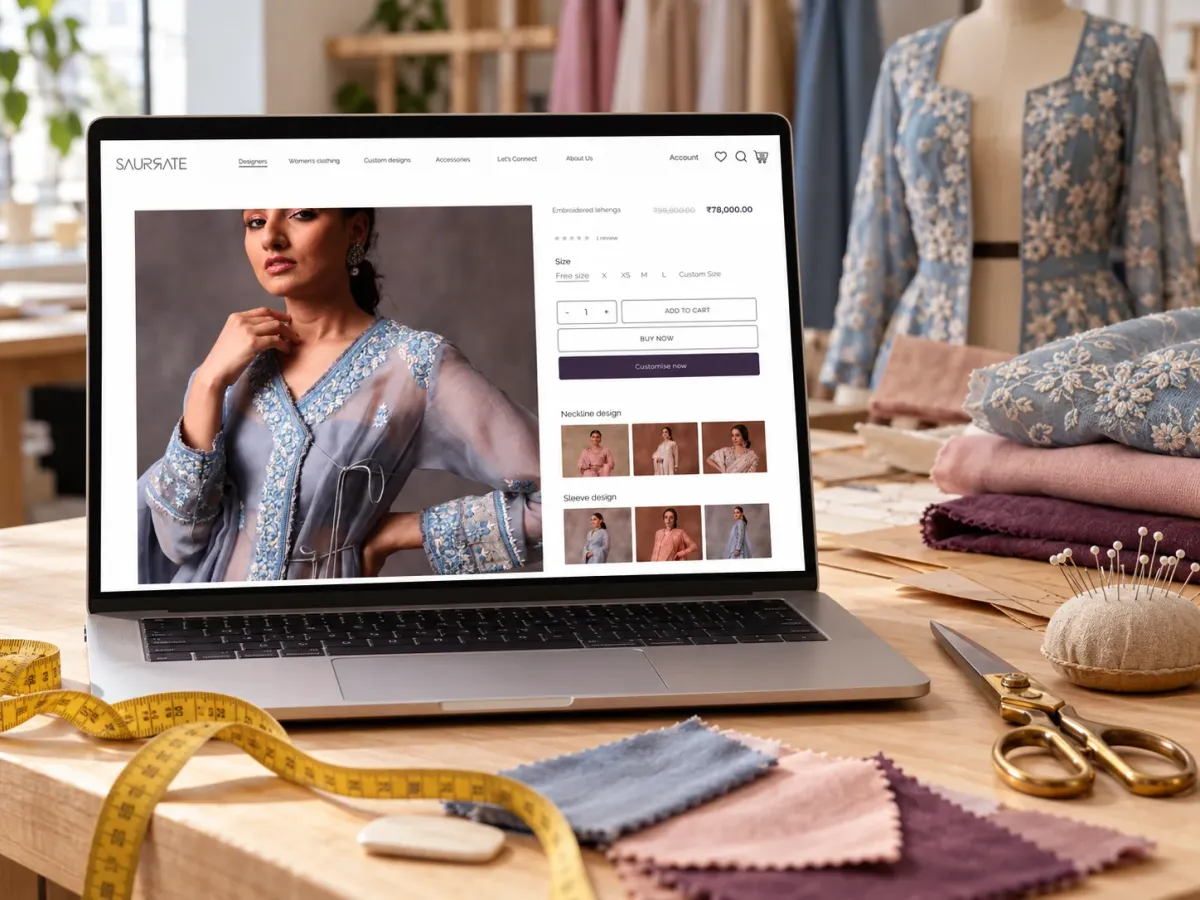
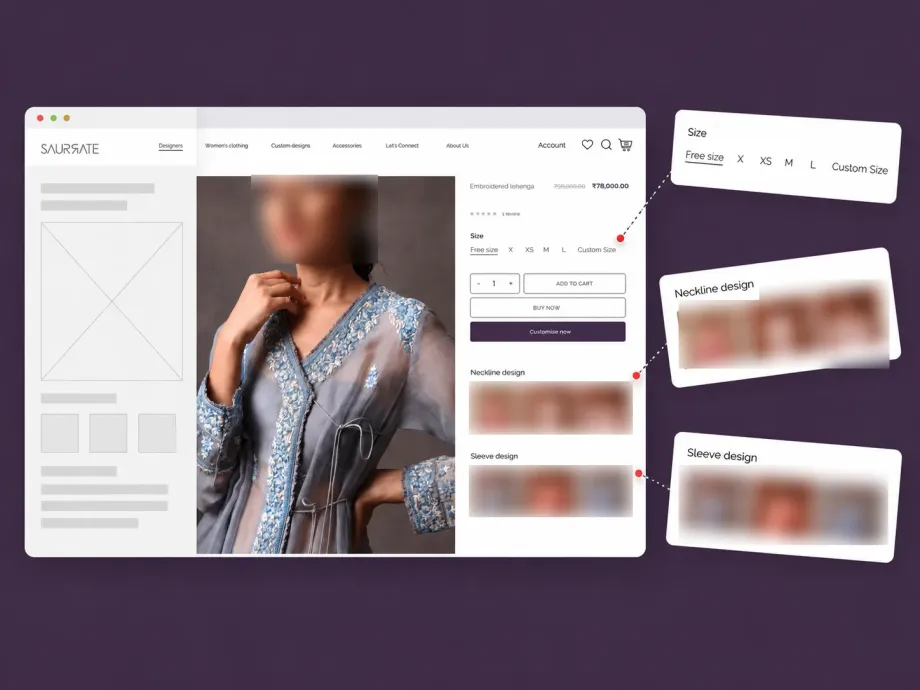
Yes. We designed and built Saurrate, a designer-fashion marketplace with made-to-measure options that took 500+ orders in its first month. Tipsy Tale, our own e-commerce brand, runs on a platform we built. We also build for brands such as Raja Fashions and Rumors, a fine-fabric manufacturer and stockist, where we were the first to bring offline 3D rendering to an iPad.
- 01/08
Tipsy Tale
Our own brand of design-led home products, and the e-commerce platform behind it, grown by us on the tech and the marketing side
Live at thetipsytale.com.
- 02/08
Saurrate
A designer-fashion marketplace with made-to-measure options (size, colour, sleeves, necks), designed and built by us
- 03/08

Raja Fashions
A Hong Kong bespoke tailor since 1957: a customer booking portal with virtual appointments
- 04/08

Rumors
A fine-fabric manufacturer and stockist: an iPad e-catalogue, order management and a backend portal. We were the first to bring offline 3D rendering to an iPad
- 05/08

York Fabrics
Website and branding, iPad apps and ERP integration
- 06/08

Elan Furnishing
Brand website
- 07/08

Sams
Brand website and customer booking portal
- 08/08

Ela Attire
Business management portal for orders and karigar (artisan) management, in the making
More of our work is on our work page.
05 Speed and checkout
Will it be fast and convert on mobile?
It is built to. Most fashion buyers browse on a phone, so speed budgets and a short checkout are set before the first page is designed.
How the screens are designed is on UI/UX design.
- Speed budgets per page type
- Product and listing pages each get a budget for how fast they load and respond, agreed before design and checked before every release.
- Images for big catalogues
- Each photo is sized for the screen that shows it, loaded as the buyer scrolls, and kept sharp enough to judge fabric and colour.
- Listing pages that keep up
- Filters for size, colour, fit and price respond at once, and a filtered page can be shared as a link.
- A short checkout
- Guest checkout, saved addresses and the fewest fields the delivery needs.
- The payment methods buyers expect
- UPI, cards, wallets and cash on delivery, through the payment gateway you choose.
06 Rules we design for
What rules apply to my store, here and abroad?
Rules on what a store must disclose, how it may design its checkout, how cards and customer data are handled, and how buyers abroad may cancel. We plan the store around them; your adviser confirms what applies.
Knowledge, not certification · not legal advice
Selling online in India
Shapes the seller details, the returns and refund pages, the grievance contact and how urgency and prices are shown.
- India’s Consumer Protection (E-Commerce) Rules: the current text is on consumeraffairs.nic.in.
- The CCPA’s guidelines on dark patterns, on consumeraffairs.nic.in.
- The Legal Metrology (Packaged Commodities) Rules, which cover the declarations on product pages, on consumeraffairs.nic.in.
Payments and tax
Shapes how cards are saved, what touches your servers and what goes on each invoice.
- RBI rules on saving card details: the current directions are on rbi.org.in.
- PCI DSS, the card industry’s security standard, on pcisecuritystandards.org. We use a payment gateway, so card details do not pass through your servers.
- GST invoicing and marketplace TCS: the current rules are on gst.gov.in.
Customer data
Shapes the sign-up and consent screens, and what is kept and for how long.
- India’s Digital Personal Data Protection Act 2023, for customer data, on meity.gov.in.
UK and EU buyers
Shapes the cookie banner, the marketing opt-ins and the cancellation window shown to buyers abroad.
- UK GDPR and the PECR rules on cookies and marketing messages, with guidance on ico.org.uk.
- The Consumer Contracts Regulations, which set cancellation rights for UK buyers, on legislation.gov.uk.
Who signs off
Your adviser confirms the rules that apply to your store; we build the pages, the checkout and the consent screens to them.
Selling to buyers in the UK? See how we work with UK companies.
07 FAQ
Questions about ecommerce app development.
What does ecommerce app development cost in India?
Our draft ranges: the MVP Launch package, for a store or app with one core flow, is ₹8–25 lakh, and a multi-seller marketplace with payouts and complex logistics sits in the complex-platform band of ₹30–80 lakh or more. What moves a budget is in app development cost in India, and every package is on pricing.
When is a custom-built store worth it?
A custom build is worth it for marketplaces, unusual buying flows or deep integrations; if a standard setup would serve you better, we will say so.
Can you build a multi-vendor marketplace?
Yes, with seller onboarding, catalogue approval, commissions, payouts and seller dashboards. We designed and built Saurrate, a designer-fashion marketplace with made-to-measure options.
Can you integrate our payment gateway, shipping and returns partners?
Yes, we integrate the providers you choose and test the full order, return and refund cycle.
How long does an ecommerce app take?
Typically 8–14 weeks for an MVP, longer for marketplaces and multi-country checkout.
What rules apply to Indian ecommerce stores?
Rules on seller details, returns, grievance handling and honest checkout design, published on consumeraffairs.nic.in. Your adviser confirms which apply to your store; we build to them.
Are you an ecommerce website development and web design company in Bangalore?
Yes: Tailwebs was founded in Bengaluru, has its office in Domlur, and designs and builds ecommerce websites, stores and apps for fashion labels and D2C brands. We also run Tipsy Tale, our own e-commerce brand.
Do you also work as an ecommerce performance marketing agency?
Yes. We can run performance marketing for the store we build, with catalogue feeds, retargeting and reporting tied to orders and returns. It is its own service: see performance and growth marketing.