
The MOSIP brand website and Marketplace, and eGov's brand websites.
01 Digital public goods
Digital public goods websites and portals
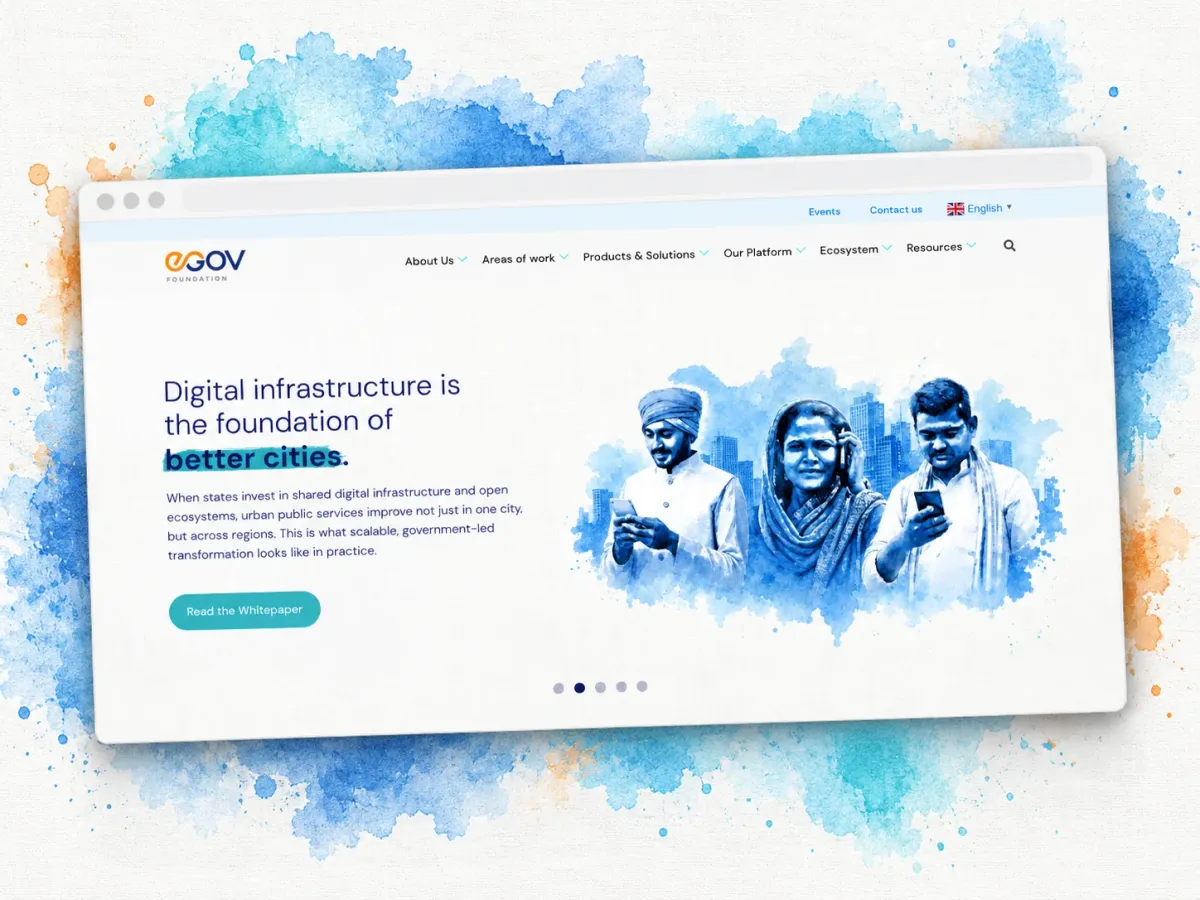
A digital public goods website has to speak to ministers, system integrators, developers and funders at once. Tailwebs builds these platform websites: clear explanations of what the platform does, adoption and partner pages, routes into documentation and community, multilingual content and accessible design. We built MOSIP's brand website and Marketplace, and eGov's brand websites (egov.org.in, with help on egov.global).
02 Four audiences
One open-source platform website, four audiences
Each audience gets its own route from the home page, so a minister and a developer both find what they came for without reading pages meant for someone else.
Home pageWhat the platform does, in one sentence, then a route for each audience
- Governments and ministriesWhat the platform does, where it is adopted, and how it is governed
- System integratorsThe partner programme and the implementation guides
- DevelopersDocumentation, repositories, releases and community
- Funders and civil societyImpact, openness and who is accountable
Many platform sites start as developer sites. The route map adds what decision makers need without burying the docs.
04 Adoption, partners and docs
How do we show adoption and keep it current?
Build the living parts of the site from structured data your team edits once, so country, partner and deployment pages stay in step as adoption grows.
Adoption pages
What it doesOne page per country or state, with its deployment and status, drawn from the same records.
Partner directory
What it doesA filterable directory of partners and system integrators, by country and by capability.
Deployment maps
What it doesA map drawn from the same records as the adoption pages, so the two always agree.
Documentation portal
What it doesConnected through shared navigation and design, whether the docs live in a separate tool or in the same site.
Events and community
What it doesEvent pages, community calls and routes for new contributors, each kept by a named owner.
Microsites
What it doesA new module or campaign gets its own pages, inside the same design and navigation.
The build is custom software development, and every template is designed by our UI/UX design team. To score your current site first, take the research website checklist.
05 What we have built
Websites for digital public goods organisations
Brand websites for two organisations behind digital public goods, and the MOSIP Marketplace. Our work lifted engagement by 30% for MOSIP and 50% for eGov.
- 01/03

MOSIP
The MOSIP brand website, for an ecosystem that serves countries
The full brand-website process: information architecture, strategy, content planning, design, development and launch.
- 02/03
MOSIP Marketplace
A live portal where adopting countries find compliant devices and software
- 03/03

eGov Foundation
eGov's brand websites
We built egov.org.in, live at egov.org.in, and helped on egov.global.
Read what MOSIP said about working with us in our Clutch reviews. More sites for organisations that publish research and policy work: research website design.
07 FAQ
Questions about DPG websites.
How is a website for a digital public good or digital public infrastructure different from a company website?
Its main buyers are governments rather than customers, so it has to explain adoption, governance and openness, not sell features.
Does the DPG Standard apply to our website?
The Standard is written for the core product; its scope is on digitalpublicgoods.net/standard. Your site should still explain your status, link to your entry in the DPG Registry and never imply an endorsement.
Can you link our main site with our DPG documentation portal?
Yes, we connect the two through shared navigation and design, whether docs live in a separate tool or in the same site.
Can adoption and partner pages update automatically?
Yes, we build them from structured data your team edits once, so country and partner pages stay in step.
Do you build or contribute to the DPG software itself?
This service covers the websites and portals that present a digital public good, not the DPG software itself.
How much does a DPG website cost?
It follows our research website range: ₹6–20 lakh ($8,000–25,000), depending on page types, languages and integrations.