
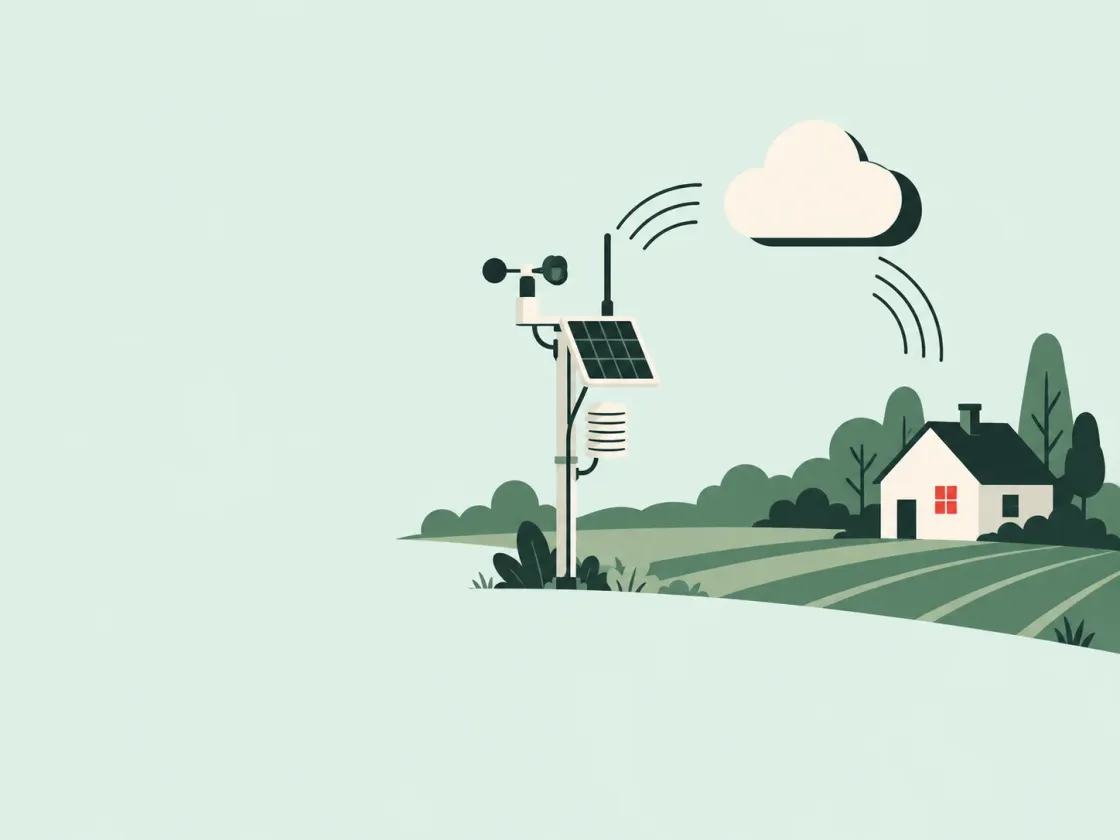
Imagine a world where your coffee maker starts brewing the moment you wake up, your car warms itself up based on the weather, and your city adjusts traffic lights in real time to keep traffic moving. That connected vision is already arriving, thanks to the Internet of Things (IoT). By linking devices to each other and to the internet, the IoT changes how we live, work and interact with our surroundings. Like any powerful technology, it brings opportunities, but also implications and ethical questions worth understanding, especially if you’re planning to build a connected product.
Where IoT creates opportunity
Smart homes and workplaces
From automated thermostats to voice-controlled assistants, the IoT makes homes and workplaces more comfortable, convenient and efficient.
Connected cities
Smart sensors help manage traffic, improve waste collection and support public safety in cities.
Industry
Predictive maintenance, remote monitoring and automated processes make manufacturing and logistics more efficient and productive.
Personalised healthcare
Wearables and connected medical equipment allow continuous health monitoring and remote care, for both prevention and treatment.
Environmental monitoring
Sensor networks track air quality, water levels and other environmental factors, so decisions about sustainability can be based on data.
How is an IoT app built?
An IoT app is built in four layers that have to work together: the device, the connection, the cloud back end and the app people use. Planning all four at the start avoids the most common surprises.
- The device. Sensors and firmware collect the data and act on commands. Decide early what the device measures, how often and how long its battery must last.
- The connection. Bluetooth Low Energy suits a device paired with a phone, such as a wearable; Wi-Fi or a cellular network suits devices that report directly to the cloud. The choice shapes pairing, power use and cost.
- The cloud back end. It receives and stores device data, manages users and devices, sends commands and pushes firmware updates. Protocols such as MQTT are common here.
- The mobile or web app. This is what people see: pairing a device, viewing live and historical data, getting alerts and changing settings. It has to cope with devices that are offline, out of range or low on battery, and sync cleanly when they come back.
A few decisions run through every layer: security (encrypted data, signed firmware updates, secure pairing), privacy (what data is collected and who can see it) and updates (how devices and apps stay in step as both change). The approach is close to building a wearable app, where Bluetooth sync, offline use and battery life drive the design: see our page on wearable and connected-device apps. For the app itself, see our mobile app development company page, and to plan a budget, our guide to app development cost in India.
If your team works in Python, our post on Python for IoT shows how device data can flow into a live dashboard.
The implications to plan for
Privacy
More data collected means more responsibility for keeping it secure and private.
Security
Every connected device is a new way in for attackers, so security has to be designed in, not added later.
The digital divide
Unequal access to technology could widen existing social and economic inequalities.
Ethical questions
Data ownership, algorithmic bias and the responsible use of AI all need careful thought.
Environmental impact
E-waste and the energy that connected devices use both need sustainable answers.
Responsible IoT development
Put transparency and choice first
Tell users what data you collect, and give them clear opt-in and opt-out options.
Build in strong security
Use strong encryption, regular updates and secure authentication.
Design for inclusion and accessibility
Design for people with different needs and abilities.
Set ethical guidelines
Agree guidelines for how data is used, how AI is developed and how automated decisions are made.
Plan for sustainability
Choose resource-efficient devices and plan responsible e-waste handling.
Recommended resources
Industry reports
The World Economic Forum and Gartner
Privacy organisations
The Electronic Frontier Foundation and the Future of Privacy Forum
Security guidance
The US National Institute of Standards and Technology (NIST) and the OWASP IoT project
Ethical AI frameworks
The Montréal Declaration for Responsible AI and the OECD AI Principles
Building a connected future responsibly
The IoT has great potential to improve lives and tackle global problems. That potential has to come with careful thought about ethics and risk. By putting transparency, security, inclusion and responsible development first, we can make sure the Internet of Things helps build a connected world that benefits everyone.
Conclusion
The Internet of Things is more than a collection of connected devices: it’s a chance to rethink how products and services work. The people who build it decide what it becomes.
The power of the IoT lies not in the technology alone, but in how it’s applied. Align innovation with ethical principles and responsible development, and connected products can be useful, inclusive and sustainable.